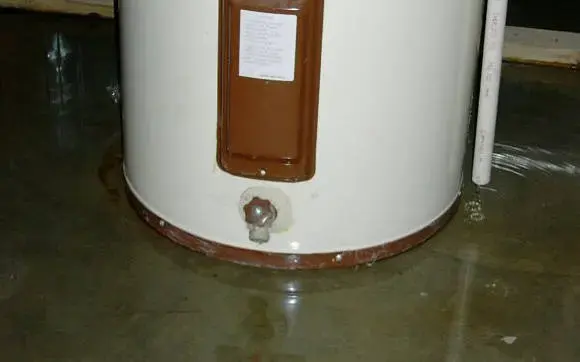
Two-story homes across Cypress, from Towne Lake to Bridgeland, put the air handler in the attic above bedrooms and hallways. On a humid August day that unit can pull many gallons of condensate out of the air. The water is supposed to run through a PVC drain line to the outside, with a secondary pan and float switch as backup. In practice, those drains clog with algae and sludge, and older metal pans rust through.
How to spot a condensate leak early
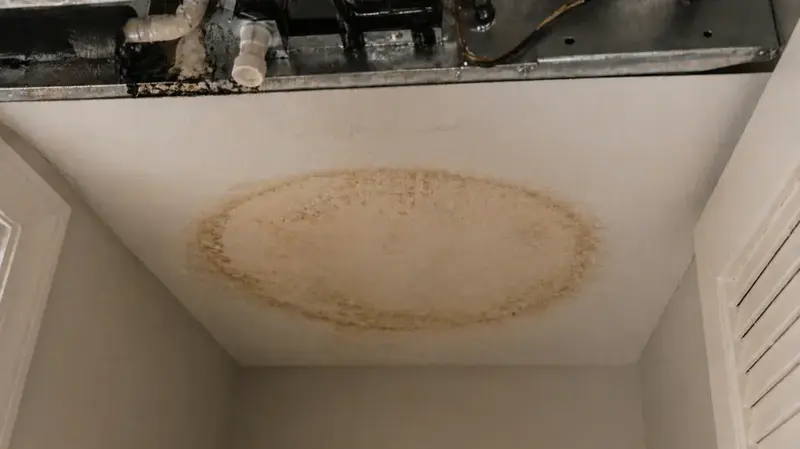
- A yellow or brown ring on the ceiling under the air handler.
- Water dripping from the secondary drain outlet over a window, a sign the main line is blocked.
- The AC shutting off by itself, which can mean the float switch tripped.
- A musty smell in an upstairs hallway.
Why slow drips cost more
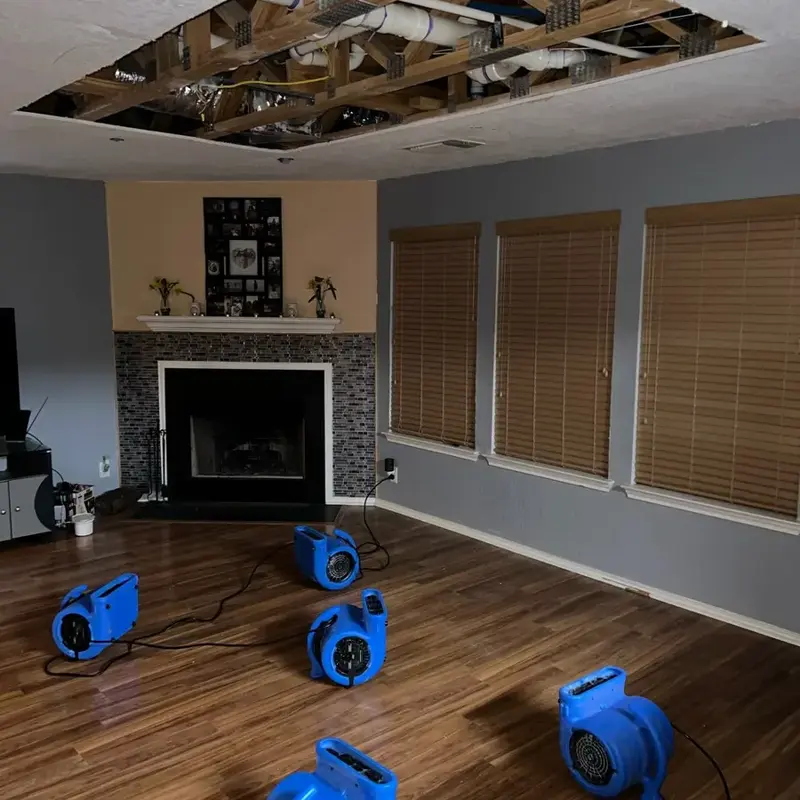
A condensate leak rarely floods a room at once. It drips steadily into blown insulation, which holds the water against the drywall until the ceiling stains or sags. By the time the stain shows, the insulation can be saturated across a wide area. Mold can start in 24 to 48 hours in wet, warm conditions, so the drying team treats the attic and the ceiling as one job.
Fix the drain, then dry
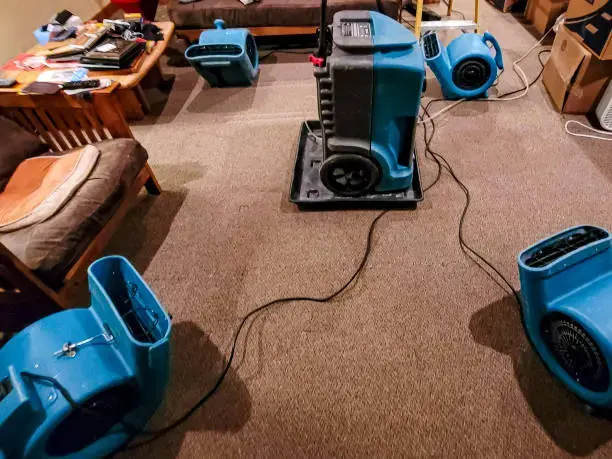
An HVAC tech clears or replaces the drain line and checks the float switch. The restoration contractor who responds handles the water damage: removing matted insulation and failed drywall, then drying what can be saved. See Energy.gov air conditioner maintenance for drain care, and the EPA indoor air quality pages on why humidity control matters. If the ceiling itself is failing, see ceiling leak water damage.