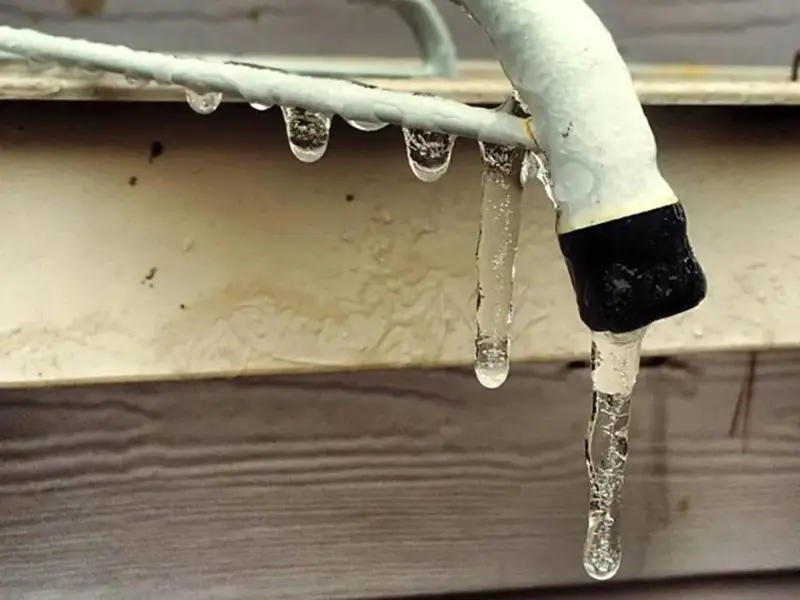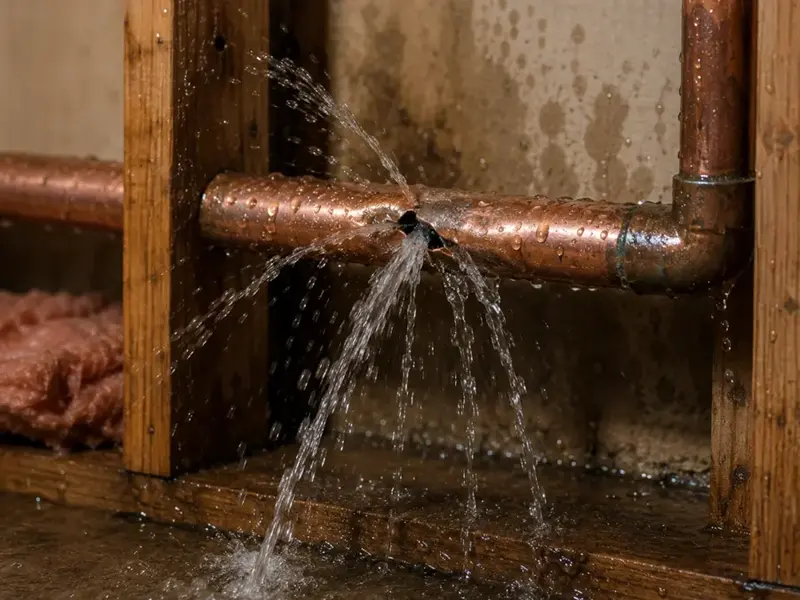
Most Cypress homes run pressurized supply lines through the walls and, in many two-story homes, through the attic and the floor system between stories. When one of those lines splits, water sprays inside the wall until someone finds the main. Common causes here include aging copper and fittings, polybutylene in homes built roughly between 1978 and 1995, loose PEX fittings, and the rare hard freeze.
Where the water goes
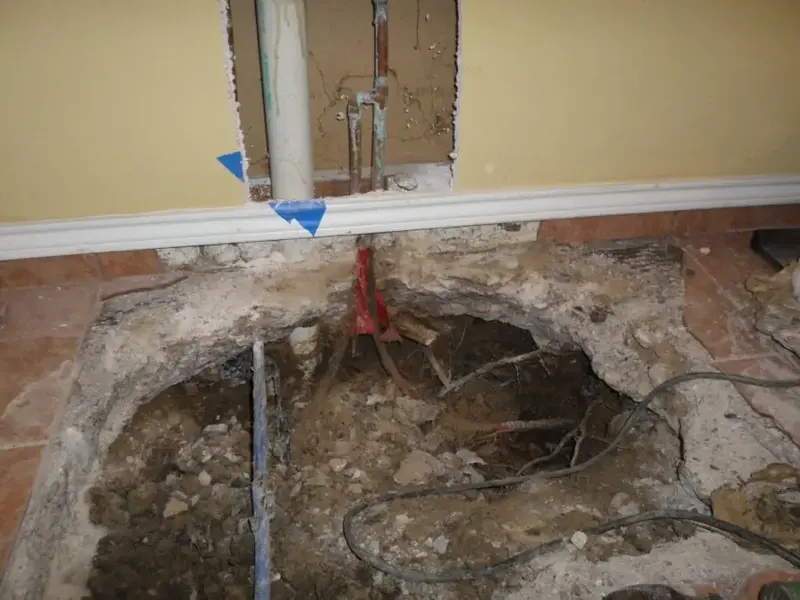
- Down the inside of the wall cavity to the slab, then outward under flooring.
- Across the ceiling below when the break is on the second floor.
- Into cabinets and toe kicks when the break is at a sink or dishwasher line.
Drying walls without tearing them out
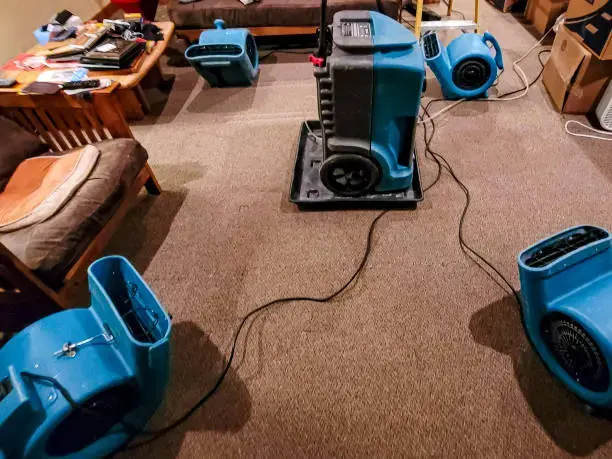
Clean water from a supply line is Category 1. When the drying team starts fast, most drywall can be dried in place. The trade approach is to remove baseboards, drill small holes near the bottom of the wall and push dry air into the cavity with specialty drying equipment. Drywall comes out only when it has lost strength, or readings show it will not dry in a reasonable window.
Plumbing and drying on two tracks
A plumber repairs or replaces the failed section while the mitigation team dries. If the home still has gray polybutylene pipe, it is worth talking to a plumber about repiping. The EPA WaterSense program explains how to read your meter to confirm leaks, and Ready.gov covers home emergency shutoffs. If a freeze caused the break, see frozen pipe water damage; for equipment and drying goals, see structural drying.