Nearly every home in Cypress sits on a slab-on-grade foundation, and much of northwest Harris County sits on clay soil that shrinks in drought and swells when it rains. That movement stresses the copper, PEX and cast iron lines running through and under the slab. Older 1980s and 1990s subdivisions south of Cypress Creek add aging pipe to the mix.
Signs of a slab leak
- A warm spot on a tile floor from a hot water line.
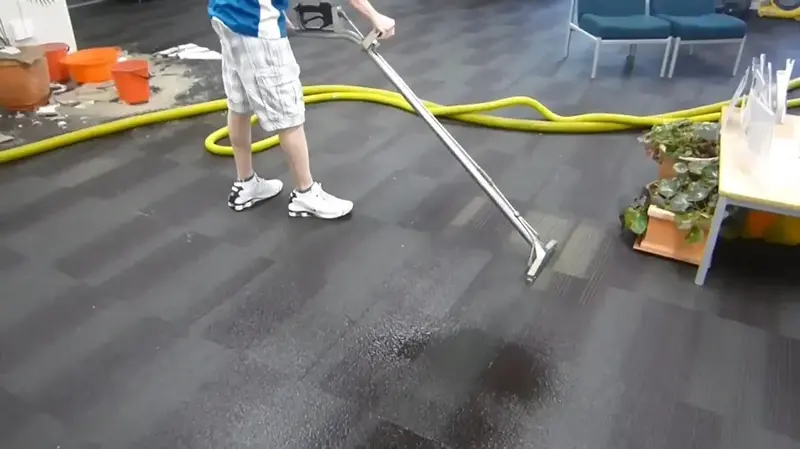
- Carpet damp along a wall with no plumbing fixture nearby.
- Baseboards swelling or paint bubbling low on drywall.
- A water bill that jumps with no change in use, or the meter moving with every tap off.
Plumbing first, then drying
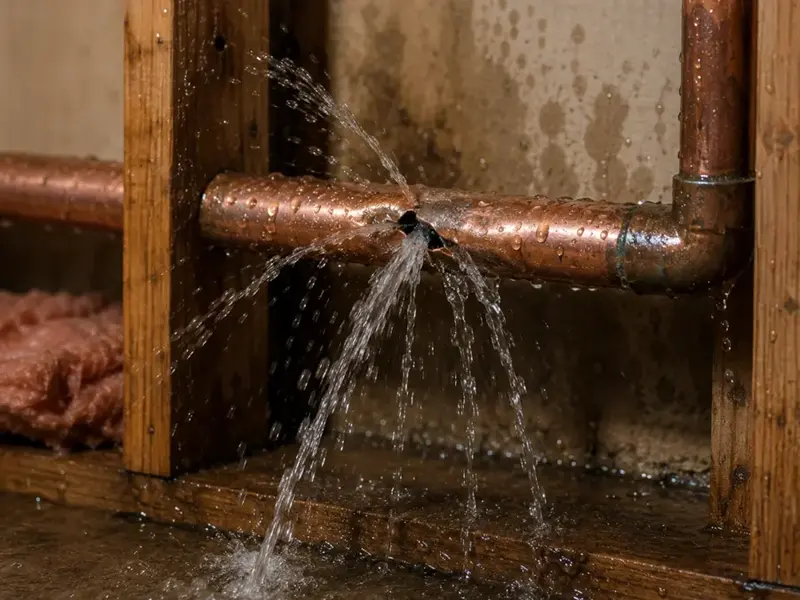
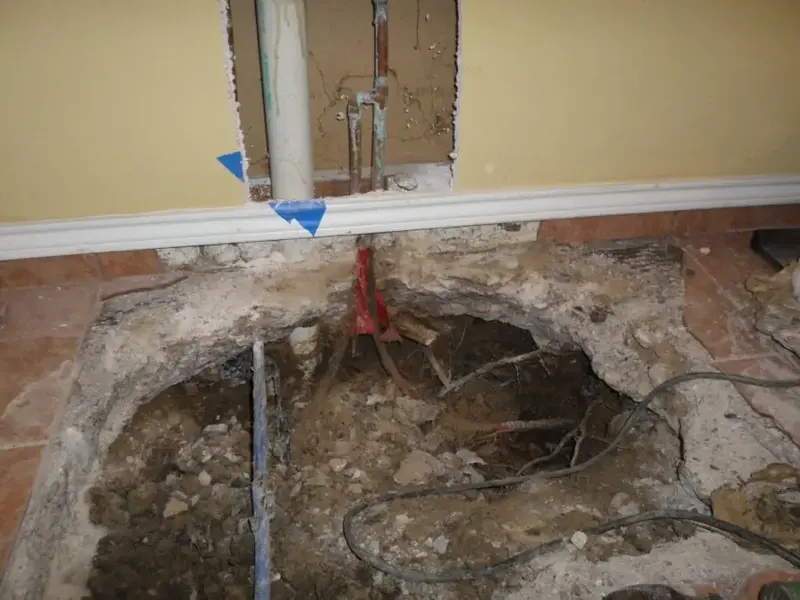
Drying a slab while the line still leaks wastes equipment and time. A plumber finds the leak with acoustic or pressure testing and either repairs it through the slab or reroutes the line through the attic or walls. Once water stops, the tech who does the walkthrough maps how far it spread. On a slab, that is often further than expected, because water moves along the concrete under tack strip and flooring.
Why concrete takes longer
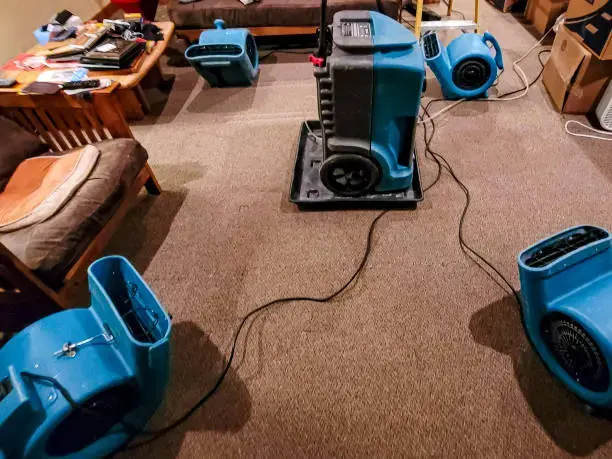
Concrete is a dense, low-evaporation material. The IICRC S500 standard treats it as a Class 4 drying situation when it is deeply wet. Crews lift or remove floor coverings that trap moisture and run dehumidification close to the slab, then compare readings to a dry area of the same slab. Hardwood over a wet slab is the slowest case; see structural drying for the method.
For leak-finding habits and water-use checks, see the EPA WaterSense program, and for how clay soil moves, the Texas A&M AgriLife Extension publishes homeowner guides. A drain line leak is Category 3; see sewage backup cleanup.