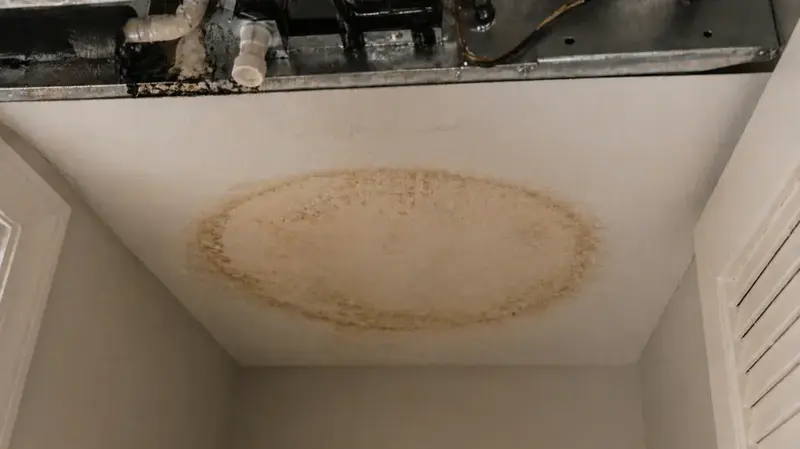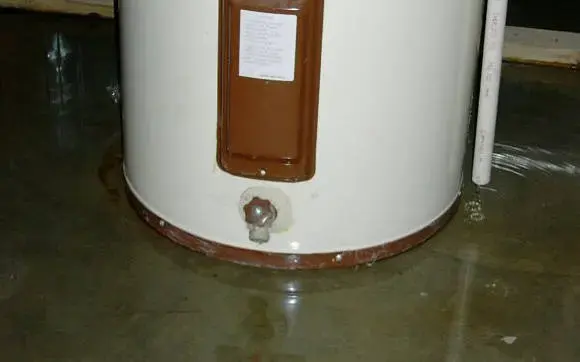
In two-story Cypress homes, the ceiling of the first floor is the floor of the second, and the ceiling of the second floor sits under the attic. That gives water plenty of ways in: a wax ring failing under an upstairs toilet, a shower pan leak, a supply line inside the floor system, the attic AC drain or an attic water heater.
Signs to take seriously
- A yellow or brown ring that grows over a few days.
- Paint bubbling or peeling on the ceiling.
- A bulge that feels soft, a sign water is pooled on the drywall.
- Drips from a light fixture or smoke detector.
Why a bulging ceiling is a hazard
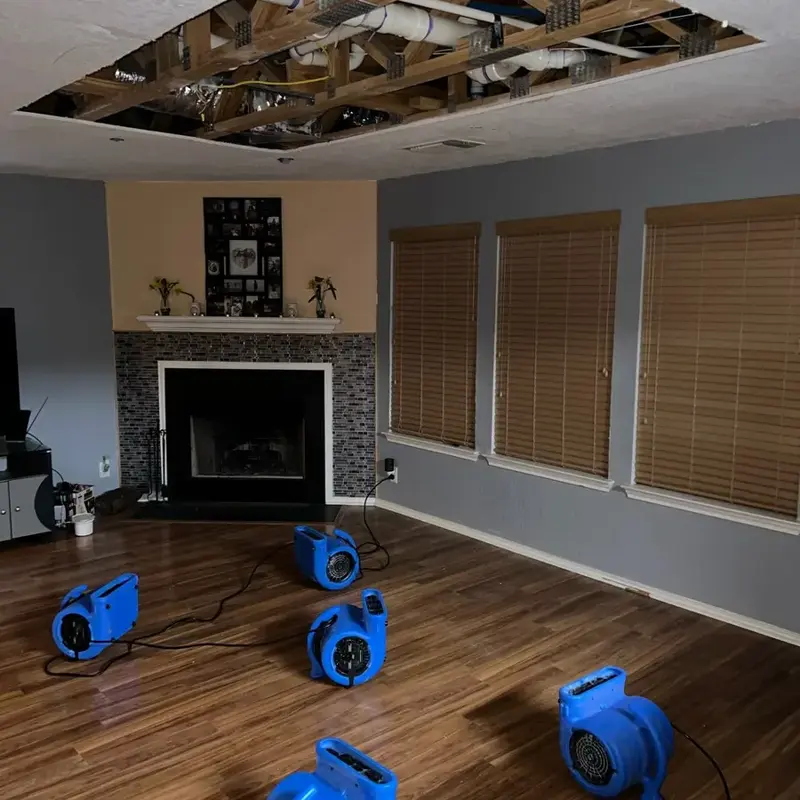
Wet drywall is heavy and loses strength fast. A ceiling holding pooled water can come down at once, along with the insulation above it. If water is near a light fixture, switch that circuit off at the breaker. The mitigation team releases pooled water in a controlled way and removes drywall that has failed.
Ceiling leak or roof leak?
A leak that shows up only during rain points to the roof; see roof leak water damage. A leak that shows up after someone showers, or that drips steadily in summer, points to plumbing or the AC; see AC condensate leak water damage. Water from a toilet overflow is Category 2, which changes what can be saved.
For home safety around water and electricity, see the Consumer Product Safety Commission and OSHA flood cleanup guidance on working around wet electrical fixtures.