Cypress roofs take a beating: strong summer sun that ages shingles, spring hailstorms, and tropical systems with wind-driven rain. Most leaks start at the weak points rather than the middle of the roof.
- Flashing around chimneys, walls and skylights.
- Pipe boots on plumbing vents, which crack in the sun.
- Valleys where two roof planes meet.
- Lifted or missing shingles after high wind.
- Damaged decking under a fallen limb.
What happens in the attic
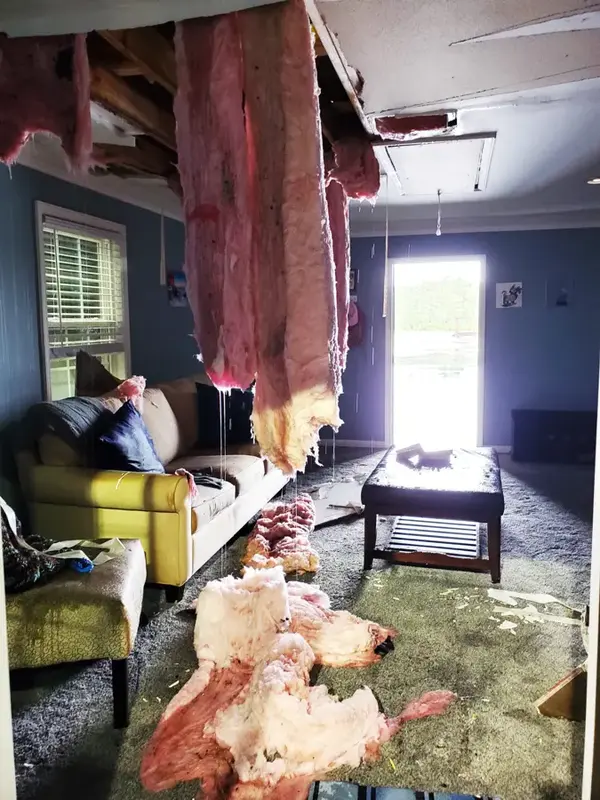
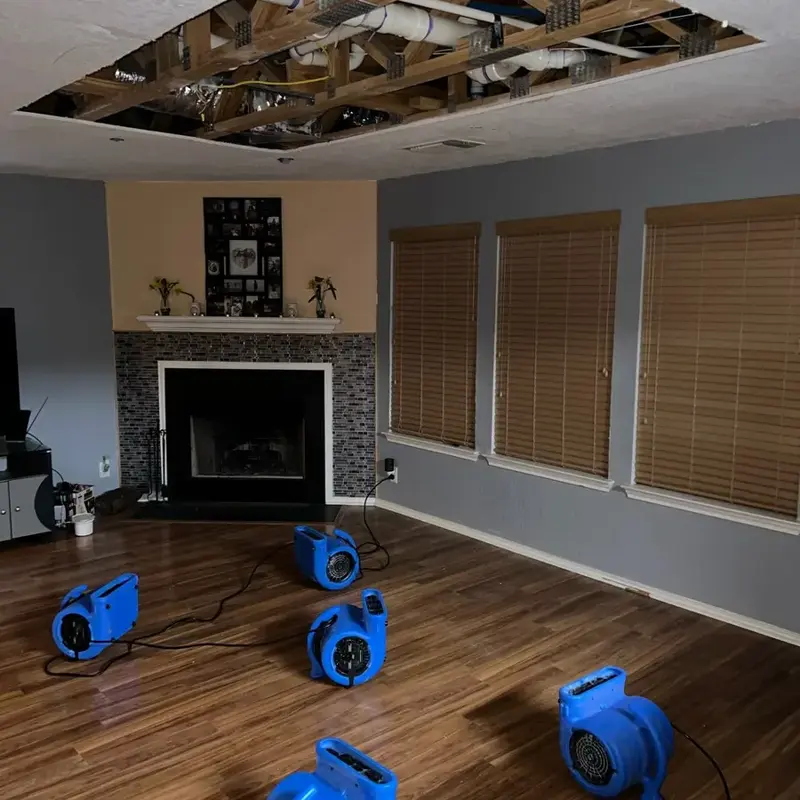
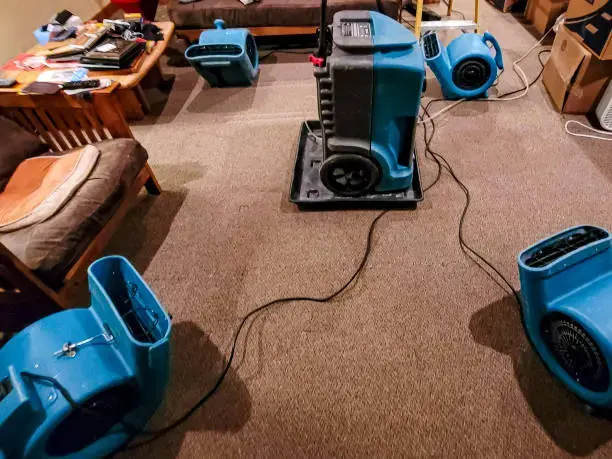
Rain that gets past the shingles runs along the decking and rafters, then drops into blown insulation. The insulation acts like a sponge, holding water against the ceiling drywall until a stain shows. In Cypress heat, a wet attic also gets very humid. The drying team pulls soaked insulation, dries the decking and rafters, and dries or removes the ceiling below.
Roof leak versus storm damage
A single leak point that shows up in rain is usually a maintenance failure, such as a cracked pipe boot. A sudden opening from wind or a falling tree during a storm is storm water damage. That difference matters on an insurance claim, so photograph the roof and the ceiling as early as possible.
A roofer handles the permanent repair. For roofing and storm preparation, see Ready.gov hurricane preparation and the Texas Department of Insurance guides on roof claims. If the stain is not rain related, see ceiling leak water damage.