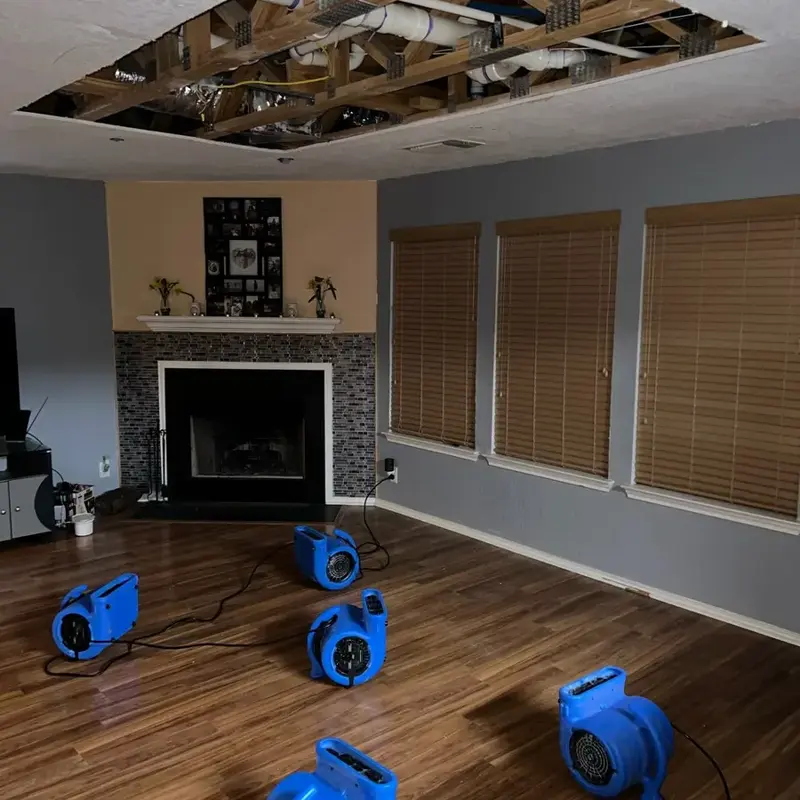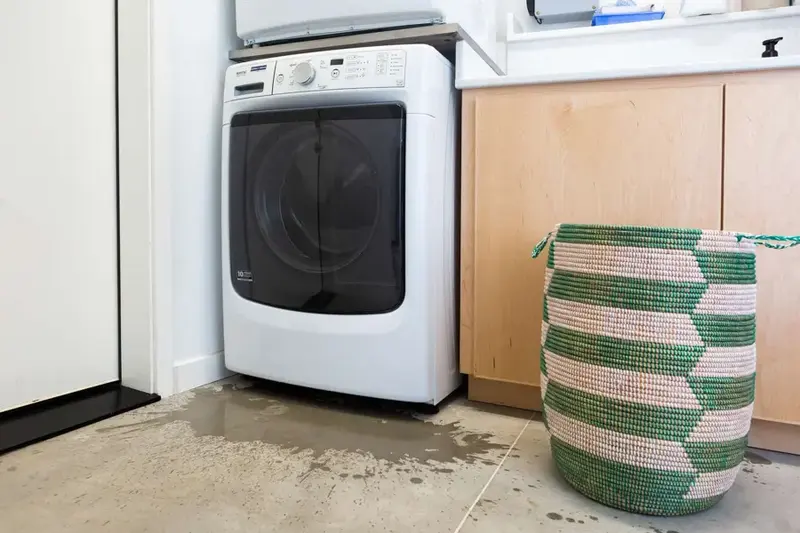
Appliance leaks are among the most common water losses in Cypress homes, and among the easiest to miss. Many newer homes put the laundry room upstairs, next to the bedrooms, so a failed washer hose ends up in the ceiling below as well as the floor.
The usual suspects
- Rubber washing machine supply hoses that burst after years under pressure.
- Dishwasher supply and drain connections under the sink.
- Refrigerator ice maker lines, often thin plastic tubing.
- Washer drain hoses that pop out of the standpipe.
Where the water hides
Water under a dishwasher or fridge runs beneath the cabinets and flooring. It soaks cabinet bases and particleboard, which swell and break down quickly. On a slab, it spreads under laminate and vinyl plank. The mitigation team removes toe kicks and baseboards to get air into those spaces and uses meters to find how far the water went.
Clean or gray water
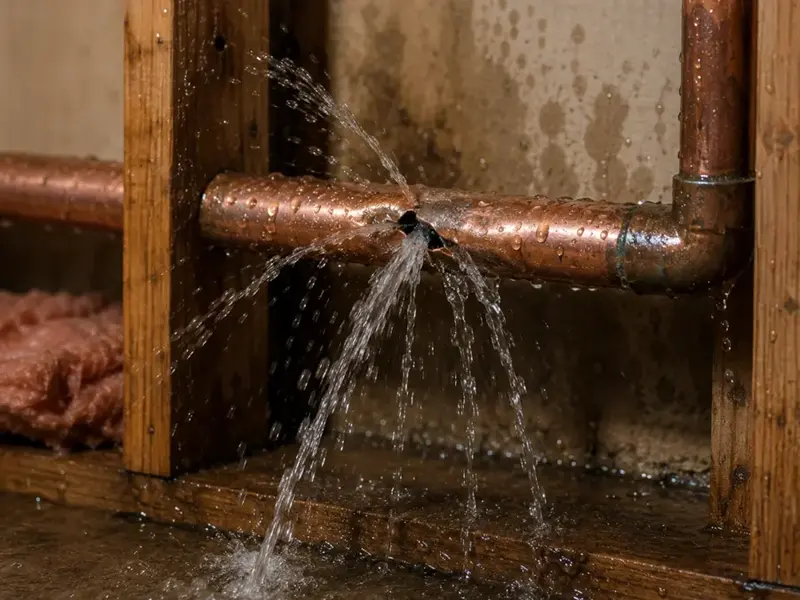
A burst supply hose is Category 1. Water from a washer or dishwasher drain carries soap and food waste, which makes it Category 2, so soaked pad and some porous materials come out instead of being dried. If the leak is in the wall behind the appliance, see burst pipe cleanup.
Braided steel hoses and yearly checks prevent most of these losses. The EPA WaterSense program has leak-checking tips, and the Consumer Product Safety Commission lists appliance recalls. For drying cabinets and floors, see structural drying.