Many Cypress homes put the water heater in the attic or the garage, and some older homes keep it in an interior closet. Tank heaters usually last around 8 to 12 years. The Houston area's hard water leaves sediment in the tank that speeds up corrosion at the bottom, where most failures start.
How water heaters fail
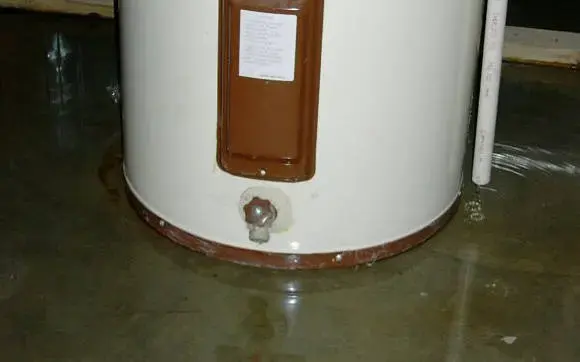
- A slow drip from a corroded tank bottom that grows over weeks.
- A failed temperature and pressure relief valve that discharges water.
- A burst tank that releases its full volume at once.
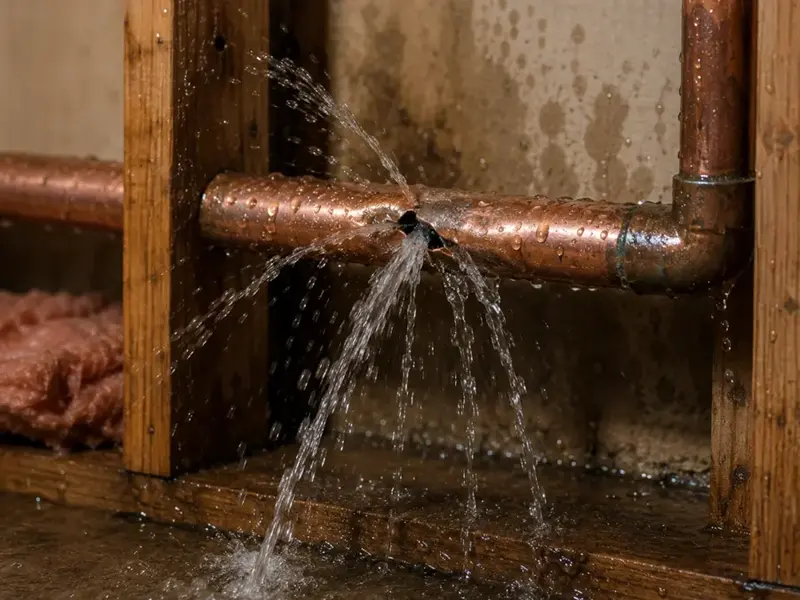
- A loose or cracked supply connection on top of the tank.
Attic heaters and the ceiling below
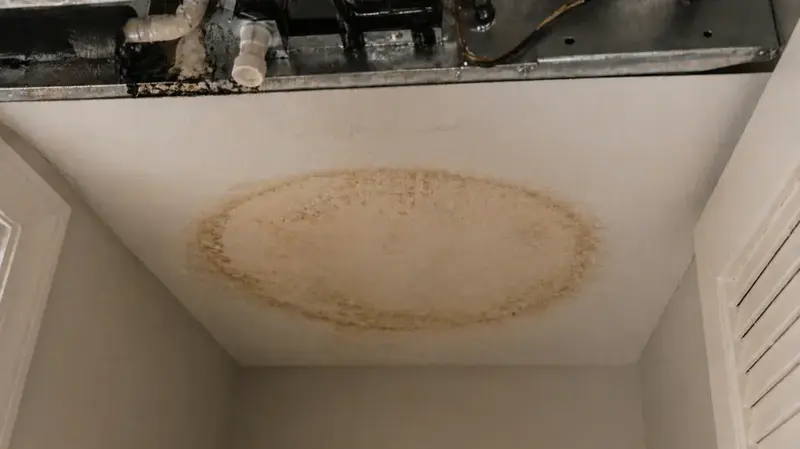
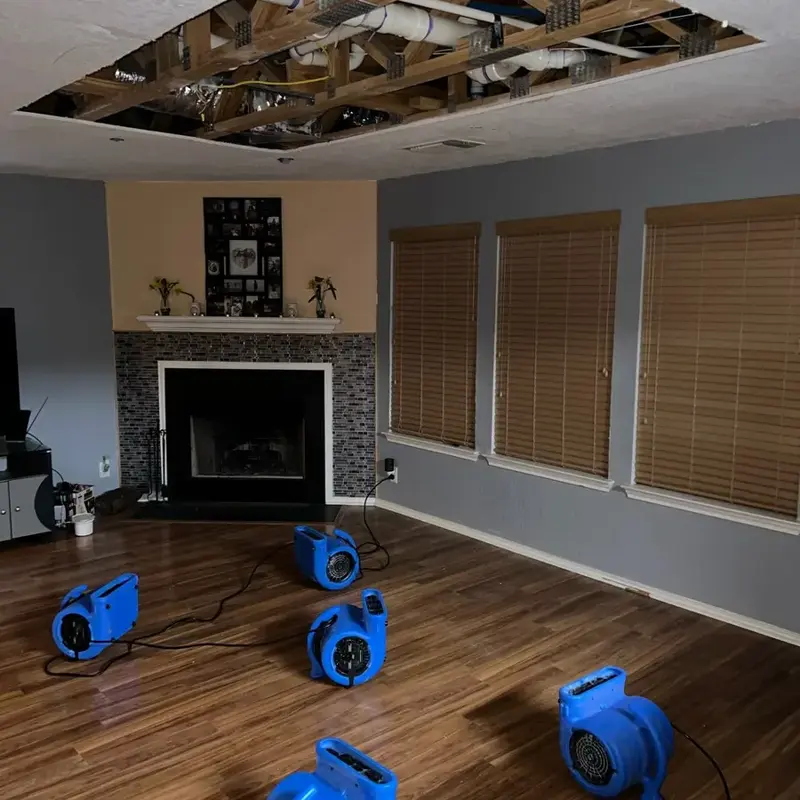
An attic heater should sit in a drain pan piped to the outside. When the pan overflows or the drain is blocked, water spreads through insulation and comes through the ceiling, often in a bedroom or hallway. The mitigation team removes soaked insulation and sagging drywall, then dries the joists and walls below. The same pattern shows up with AC condensate leaks from the air handler next to it.
Garage heaters and the house
A garage leak looks harmless on bare concrete, but water can travel under the wall plate into the adjoining room, soaking carpet and drywall on the other side. Meters find that before it shows.
For heater lifespan and safety, see Energy.gov water heating. The Consumer Product Safety Commission tracks water heater recalls. For the drying method, see structural drying.